

“There is no cavalry. There is nobody coming. It is just us and our friends and the people who care.” - Cameron Schiller, CEO of Rangeview
Prologue
Next week, I will be standing in a town of around seventeen thousand people wedged between a Chevron refinery and the southern runways of LAX, meeting with some of the most important companies in the American hard-tech renaissance. One builds nuclear reactors on a production line, the way Ford built cars. One builds the autonomous weapons that broke the primes’ fifty-year monopoly on the Pentagon, and is now worth more than most of them. One is an accelerator that mints the next cohort, a week in a warehouse that has already produced companies backed by the biggest venture firms in America. This essay is about the system that produced them, and how Britain could build a similar, if not better system but is instead preparing, with great ceremony as per, to fumble it.
The town is El Segundo, Los Angeles County. The founders who moved there call it The Gundo. It covers five square miles, two of which are refineries. In the early days, they burned the week’s packing pallets in bonfires on Friday nights, lived in each other’s factories, and texted each other at two in the morning to check who was still on the floor. The operating system of the place is a group chat: do you have this tool? do you have a vendor? do you have a freight forwarder? do you know someone at this agency? Walk down Main Street and you will bump into somebody who has put hardware into space. The companies compete for the same engineers, watch each other’s shipment numbers in the Wall Street Journal, and describe the resulting paranoia as the best thing that ever happened to them. If Silicon Valley is America’s safe haven for software firms, El Segundo is the equivalent for hardware. It is the beating heart of America’s reindustrialisation revolution.

El Segundo, the Florence of Hard-Tech

A traditional Gundo Bonfire, June 2024
None of this was an accident. One of the founders ran his site selection like Billy Beane, every column in his spreadsheet measuring proximity: more and better hardware talent than anywhere else in America, warehouse space priced for a pre-seed company, technicians available from the primes and the refinery, universities close enough for the science hires, LA money close enough to walk into. In true Moneyball-style, he was scoring what the market wasn’t pricing: distance.
So was the town itself, decades before he arrived. El Segundo grew on the rotting bones of dead Cold War aerospace. Solid rocket boosters for the space shuttle were tested inside one of the buildings these startups now occupy, the warehouses were designed for manufacturing because manufacturing is what they were for, and the workforce never fully dispersed when the contracts did. When the new generation showed up, everything they needed was already on their doorstep. People look at the Gundo and see a portfolio of companies. Look again. The product is density.
Now look at Britain. We are currently pointing more public money at the physical economy than at any time in living memory: a £298 billion Defence Investment Plan, a clean power buildout remaking the grid, AI Growth Zones chasing compute, munitions factories reopening, artillery production back onshore for the first time in a generation. Sovereignty is the word every one of these programmes now reaches for, sovereign capability, sovereign compute, sovereign supply chains, and all of it means the same thing: hard things, built here, by firms we control.
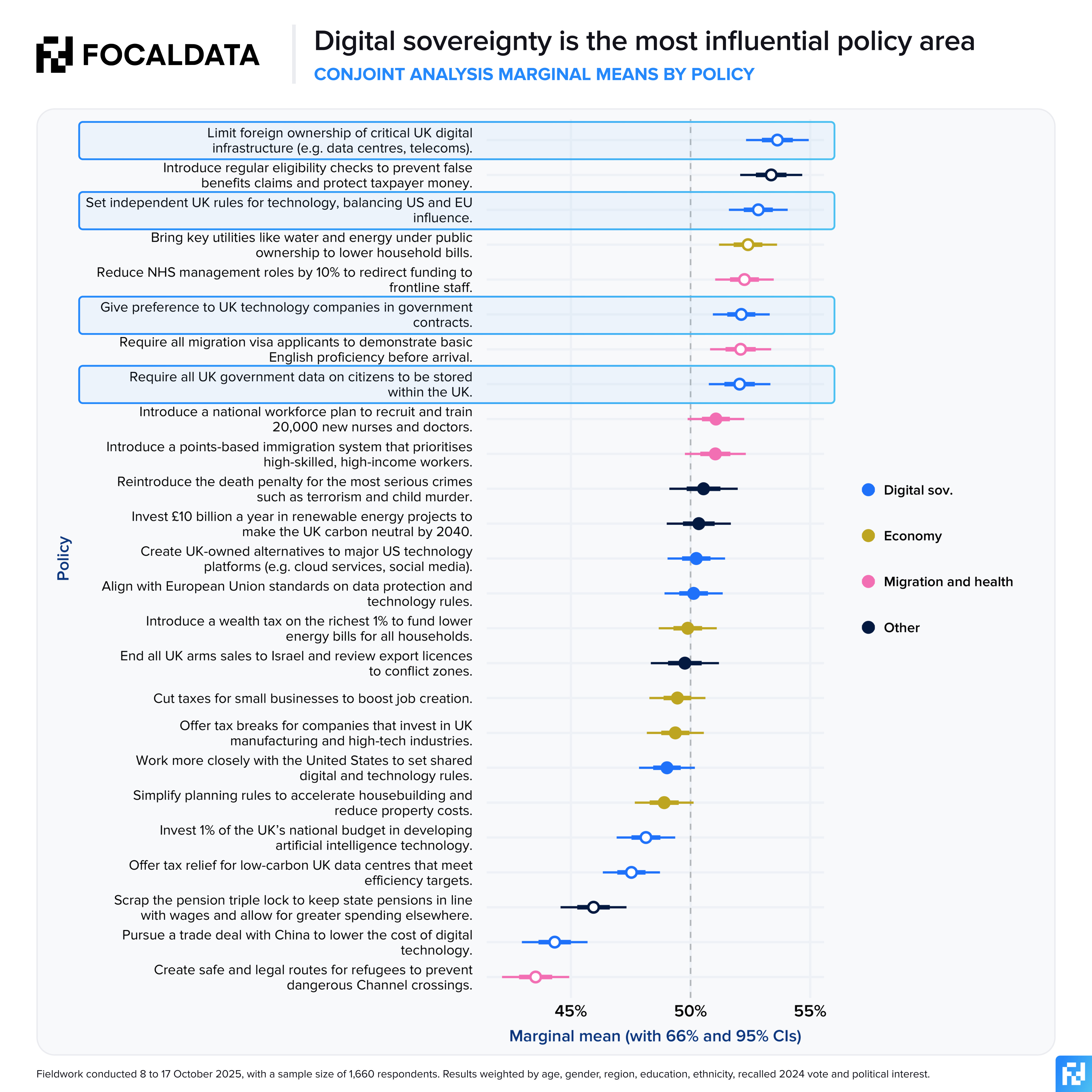
Make no mistake: sovereignty is not a niche enthusiasm of the tech-bro commentariat. When Focaldata ran a conjoint experiment last year, testing which policies actually move votes rather than merely poll well, the sovereignty cluster came out on top. Limiting foreign ownership of critical digital infrastructure, setting independent UK technology rules, requiring British data to stay onshore and giving preference to UK firms in government contracts all outranked the supposed heavyweights: the NHS, immigration, the economy, crime. Voters could not always name the concept, but the instinct beneath it, that Britain should own the things it depends on, was among the most powerful we measured.
If you want a picture of what that instinct is reacting to, consider the news that broke yesterday as I was writing this. The Royal Navy’s new K3 Scout drone boats, built by the British firm Kraken and operated by the Royal Marines since March, were found to contain camera components that were quietly transmitting “heartbeat” signals to an IP address in China. Kraken had bought the cameras from a third-party supplier who assured them the parts were secure. Nobody caught it until a routine cyber assessment did. The MoD insists no operational data was compromised, and it may well be right. But the deeper point survives either way: a country that does not build its own critical components does not get to know what they are doing. Sovereignty is more than a slogan.
Unfortunately, we are about to make one specific, predictable, very expensive mistake with these record levels of public investment. The mistake of fairness. Every region will get its own cluster, every mayor will get their own press release, and the money will be spread across the map like Lurpak until no single place has enough of it to matter. Britain has institutions dedicated to this regenerative mistake and it essentially is the one thing the Civil Service somehow reliably delivers on time and on budget.
The thesis of this essay is a fairly simple one. The land exists; the money exists; the ambition exists. What’s missing is putting them all in one place.
Part I: The magic is the cluster
£160 million concentrated in one square mile beats £160 million spread across a region. The concentrated version produces a cluster and the distributed version produces a grant programme. These are different objects with different physics. Most British regional policy assumes the opposite, treating economic development as if it were gravy that you can pour evenly across a map. Fifty years of enterprise zones, growth deals and regional funds say otherwise. And so does every hour of footage from the miracle that is El Segundo.
Why? Because a cluster is not a collection of firms. It is a set of compounding effects that only switch on above a certain density. Here are five of them.
The first is shared capital equipment. No pre-seed hardware company can justify a five-axis machine shop, an EMC chamber or a proper test rig on its own balance sheet. Twenty firms within walking distance can, and in the Gundo they effectively do, through an informal borrowing economy that works as a distributed factory. It is the group chat again, every “do you have this tool” a capital expense one startup avoided because a neighbour had already made it. Spread the same twenty firms across a region and each one buys, rents or goes without. The cluster’s equipment bill is a fraction of the diaspora’s, and the difference goes into engineering.
The second is labour-market liquidity. In a dense cluster, engineers change firms without changing homes, which means the talent pool deepens with every hire rather than fragmenting with every departure. When a startup dies, and startups die, its team is absorbed by the companies next door within weeks instead of leaving hardware, or leaving the country. Hiring risk collapses for everyone at once, because joining any one firm becomes a bet on the neighbourhood rather than on a single cap table. The Gundo did not conjure this workforce from nothing: the primes and the refinery had spent decades training technicians within a few miles of each other, and the startups moved into the middle of that labour pool the way you’d build a pub next to a brewery.
The third is supplier and first-customer proximity, which turns iteration loops from procurement cycles into afternoons. When the machinist is down the road, a design change costs hours; when the first customer is down the road, a demo costs a van. Proximity cuts both ways, though. One Gundo company whose entire pitch is making parts fast spent eight months unable to deliver because it could not source specialty alloy ingot in America at any price. Another watched a demonstration in front of senior military officers collapse because a supplier three tiers down had swapped in a propeller with a fatigue flaw. The best hard-tech cluster in the Western world is only as strong as its materials layer, something Britain’s regional investment policy almost always ignores.
The fourth is knowledge spillover, which economists have known about since the days of Alfred Marshall (and later Krugman, Porter et al) who wrote that in an industrial district, the secrets of the trade are “in the air.” Tacit knowledge doesn’t travel in Notion URLs between cities, but in overheard conversations down the pub, in walking through a neighbour’s factory at midnight, in the accumulated scar tissue of people who have already made your next mistake. The founders of El Segundo put it better than any literature could in a podcast from last year: there are people here who know how to see around the technical corners. You cannot email that. You can only stand near it.
The literature around this models knowledge spillover as a weighted sum of what everyone around you knows and leaves the weight open. Different studies fill it in with technological similarity, supply-chain links, shared labour, or distance (Frontier Economics, 2022; after Griliches, 1979). The El Segundo case studies tell us that for the tacit knowledge that actually matters here to effectively spread, nothing matters more than distance. So write the weight as a sharp decay in how far apart two firms sit, and you get:
S = Σⱼ e^(−λdⱼ) Rⱼ
where S is the total useful knowledge firm j absorbs, Rⱼ is how much each nearby firm knows, dⱼ is how far away it sits, and λ is how fast knowledge dies with distance.
In plain English: the knowledge you absorb is the sum of what everyone around you knows, discounted by how far away they sit, and the discount is absolutely ruthless. Spillover doesn’t gradually fade as firms spread out, it just collapses. You can even watch λ get measured in the wild. When researchers tracked patent citations across the UK, the odds of one firm building on another’s work roughly halved between the 0-to-25-mile band and the 25-to-50-mile band, then flattened to nothing. And patents are the easy case, codified, written down, portable. The tacit stuff, the see-around-the-corners knowledge, decays much faster.
The fifth makes the other four compound: the ambition flywheel. When the founder down the street is shipping hundreds of drones a week and the one around the corner is assembling nuclear reactors, your own definition of a productive month recalibrates whether you like it or not. On the same podcast, one of the Gundo founders said: your brothers are building for your country faster than you feel like you are. That pressure’s most measurable symptom is migration. Ask these founders what share of their teams relocated specifically to join the neighbourhood and the answers run from a third to two thirds. Talent moves for density. Nobody truly special moves for a levelling-up strategy.
What ties these all together is non-linearity. Double the spacing between the same twenty firms and you don’t get half a cluster; you get twenty isolated companies and a nice map for the annual gov.uk report. Dispersion doesn’t just dilute the returns to clustering, it forfeits them entirely. Which is why “a bit for everyone” is the one allocation strategy guaranteed to produce nothing, and the one Britain is regrettably reaching for.
Part II: Britain already has every ingredient (in separate boxes)
Britain has already manufactured every component needed for a successful cluster. Parliament has legislated them. The Treasury has funded them. And MHCLG publishes progress reports on them twice a year.
Britain operates 22 Industrial Strategy Zones: 10 Investment Zones, 9 Freeports, and 3 places running both. The Freeport instrument set is actually somewhat decent once you lay it out in one place. £25 million in seed capital per Freeport to remediate land and connect sites. Tax reliefs running to September 2031 in England and 2034 in Scotland and Wales: enhanced structures and buildings allowances, 100% first-year relief on plant and machinery, employer National Insurance relief on every new hire, full business rates relief. Customs sites offering duty deferral and duty inversion, now an optional bolt-on rather than a requirement. And a 25-year retained business rates settlement, which lets the combined authority keep the rates growth its zone generates and borrow against it today. English Freeports alone are already projected to retain more than £880 million on this mechanism. Investment Zones run a parallel offer, up to £160 million over ten years per zone, splittable however the local area likes between tax relief and flexible spend, so a mayor can point it at whatever the cluster actually needs.
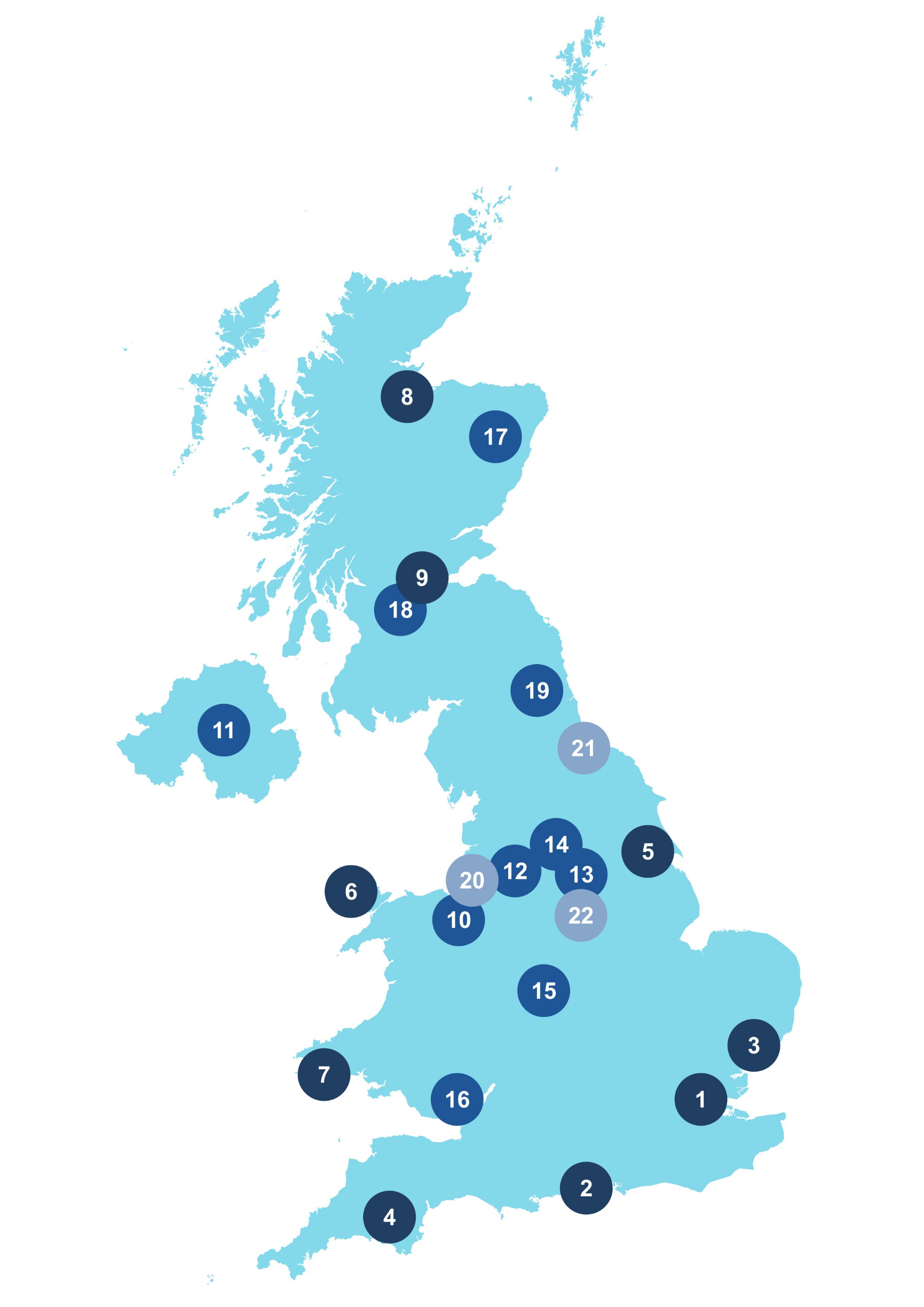
Industrial Strategy Zones Action Plan, 2025
Does this work? Sure, for a certain kind of company. The government’s programme report from last year tallies £6.4 billion in private investment landed on Freeport sites, 89% of it FDI, 2,671 hectares of derelict land remediated, £1 billion in private capital unlocked for site preparation alone. If you read the case studies, you’ll notice a pattern begins to emerge. A Korean conglomerate’s wind turbine plant, a Japanese cable factory, a German chemicals expansion. The zones have become excellent at one thing: landing the branch factory of a large incumbent multinational. Nowhere in the programme is anything built for the other species of company, the pre-seed founder with a warehouse and a group chat, the species the entire American hard-tech renaissance is made of.
Well, almost nowhere. Buried in the programme report, one zone is quietly running the proof of concept for this entire thesis. In Plymouth and South Devon Freeport, a marine-autonomy SME leased a facility in the South Yard tax site and, two years later, delivered the Royal Navy’s first unmanned submarine. A few doors down, a prime converted an underused building into an armoured vehicle production line, sourcing half the supply chain from the surrounding region. That is the cluster mechanism in miniature - a shared site, resident customer, a startup and its supply chain condensing around an anchor. It works. It is also subscale, one accidental experiment out of twenty-two zones, and parked on a peninsula at the far end of the South West.
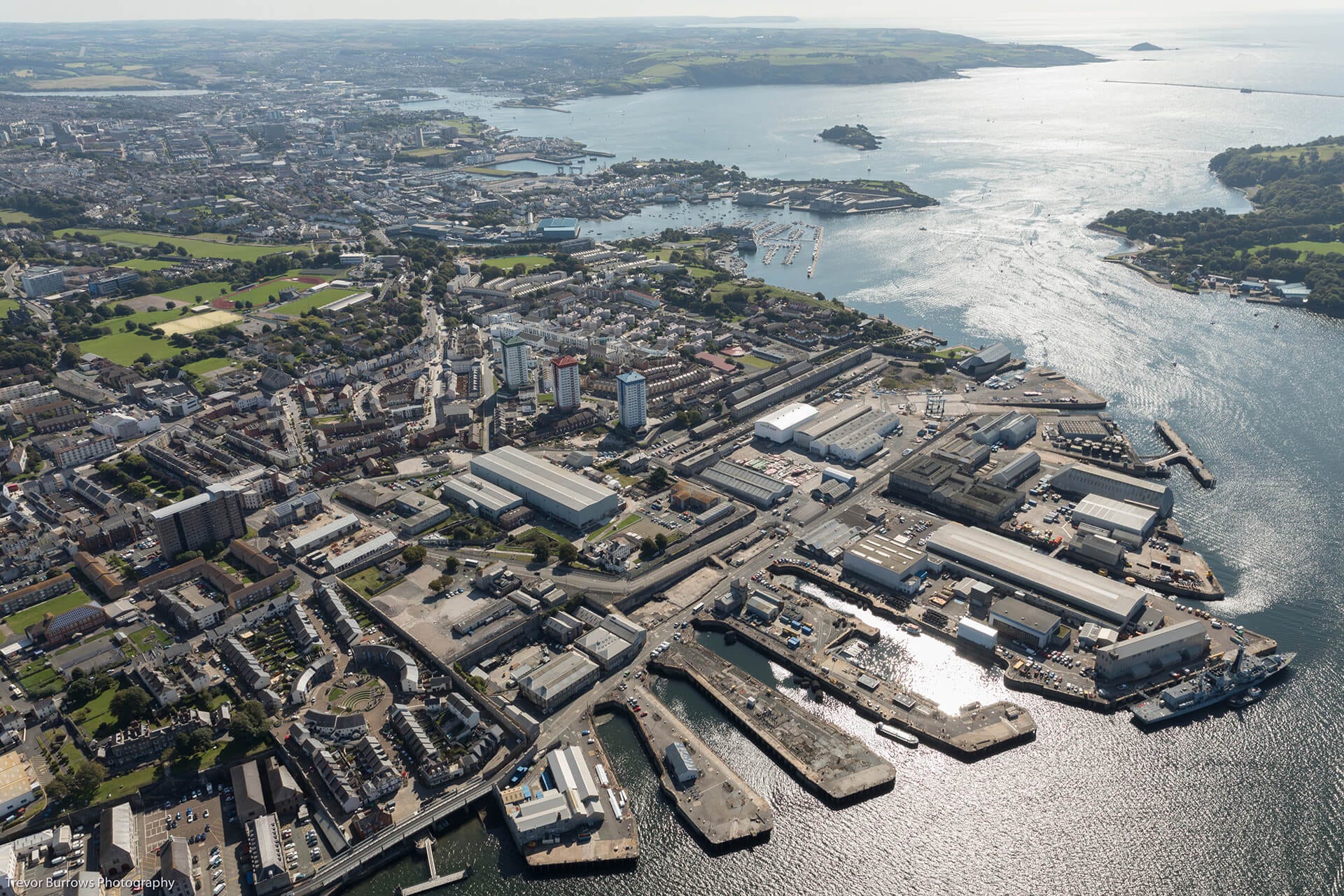
Plymouth and South Devon Freeport
Meanwhile the coordination layer is being softly attempted elsewhere. In June 2026, four Yorkshire mayors launched a defence cluster built on some fairly serious assets: the new artillery factory in Sheffield, Forgemasters, the AMRC, and a £50 million South Yorkshire Defence Growth Deal. What did this big launch actually contain? Early access to MoD contracts, secured by memorandum. And that was it. No tax sites, no shared infrastructure, no equity, and the lot spread across four mayoralties, a hundred miles end to end. For a single number that captures the institutional weight Britain currently assigns to cluster-building, the 2025 Freeports Programme Report supplies it: the average English Freeport delivery team is 6.5 full-time staff. Six and a half people per zone, to do the job that took El Segundo sixty years, a refinery and the entire Cold War aerospace complex. Great, we’ll catch them in no time chaps.
Now, the money. The Industrial Strategy Zones Action Plan commits to a mayoral recyclable growth fund, live from the 2026/27 settlement, devolving Financial Transactions funding to mayors in the North and Midlands. This matters because Financial Transactions capital cannot be granted away. By its accounting rules it must be deployed as loans or equity, and the repayments recycle back into the fund. So, in short, a mayor now holds a permanent, returns-generating investment vehicle, restricted by design to taking stakes rather than writing blank cheques, sitting inside the integrated settlement. It is the closest thing Britain has ever devolved to a regional sovereign wealth fund. But nobody has pointed one at hard tech.
There is some supporting artillery for all this stuff too. A Strategic Sites Accelerator backed by over £600 million, selecting its first wave of sites within the year. The National Wealth Fund, £27.8 billion, with a standing published commitment to work with every Industrial Strategy Zone on access to finance. UK Export Finance with £80 billion in capacity and regional Export Finance Managers being deployed into exactly these clusters. The British Business Bank’s new Cluster Champions programme plus £100 million through its Nations and Regions Investment Funds. Mayoral Development Orders arriving through the devolution framework, letting a mayor grant planning consent across a zone rather than plot by plot. A NESO connections accelerator that jumps high-value demand projects up the grid queue. And, sitting in section 3.2 of the Action Plan, a stated aim to develop regulatory sandboxes within clusters, enabling experimentation and market entry for novel technologies. It is this tucked-away commitment that could let a British zone, under the right conditions, beat El Segundo at its own game. More on this later.
The government has also already invented a sector-specific zone class. When it decided data centres were strategically critical, it created AI Growth Zones, a bespoke designation with streamlined planning and enhanced resource access. So the principle that a strategic industry warrants its own zone type is conceded and published. It is also, like almost every other thing the government tries to do, failing. Fifteen months in, five zones from Oxfordshire to Lanarkshire have produced one newly approved data centre between them, with most claimed investment predating designation. A sector-specific zone works only if you build one, fill it, and plumb it.
So the shelf is stocked. A twenty-two-zone chassis with a decade of tax relief and a borrowable 25-year revenue stream, a working proof of concept in Plymouth, mayors holding recyclable equity capital from next year, and planning, grid, sandbox, export-finance and wealth-fund powers stacked behind them, with a £298 billion Defence Investment Plan, a national grid buildout and a compute race blowing at the back of all of it. Every instrument exists, and that is exactly the trap. A shelf full of instruments looks like a strategy, which is why nobody in the system feels the absence of one.
Part III: How To Make a Hard-Tech Cluster
Three things separate one of Britain’s press-release clusters from a Gundo. None of them appear in any programme the country currently runs. And all of them are cheap!
Ingredient 1: Regulatory and materials plumbing. This is the agglomeration subsidy in physical form, which El Segundo inherited free from dead aerospace. There’s quite a few layers to this and we’re not even halfway through this essay so feel free to caffeine up now.
The first layer is where Britain can do something genuinely new, because it is the layer where even El Segundo failed: the best hard-tech cluster in the Western world cannot test where it builds. The drone companies that define the place sit under the LAX approach and conduct their flight testing somewhere else; one moved an entire team to another state for six months purely to find airspace deregulated enough to work in. The nuclear company got its first regulatory approval in the Philippines, because turning on a reactor was easier at the edge of the world than anywhere in America, and is only now switching one on in Utah. The mining company drills its test holes a three-hour drive past the middle of nowhere, Nevada. The weather company has been banned outright by two states. Add it up and the single biggest constraint on American hard tech is not capital or talent. It is regulatory geography.
Britain has already written the fix for this into policy without realising it. As I highlighted a few paragraphs ago, the Industrial Strategy Zones Action Plan commits in black and white to developing regulatory sandboxes within clusters, to enable experimentation and market entry for novel technologies. Take that commitment literally and put the regulators inside the perimeter: segregated trial airspace over and adjacent to the zone with CAA trial authorities on site, an ONR pre-licensing pathway for advanced reactor work, the Environment Agency permitting run from within the zone, standing range and drilling access on adjacent land. The firm building an autonomous system in the morning flies it in the afternoon; the firm building a reactor demonstrates to its regulator across the road. A British zone designed around permission to test would hold an advantage El Segundo cannot buy at any price.
The second layer is defence. A hardware SME that wins its first defence contract today begins a facility security clearance process that routinely runs twelve to eighteen months, during which it cannot hold classified material, cannot host the customer properly, and burns runway waiting for paperwork. So pre-clear the zone. Sponsor the tax sites to a facility clearance baseline as public infrastructure, with vetted-access buildings, accredited IT and cleared site management already in place, so that an incoming firm inherits a clearance posture the way a tenant inherits a fire certificate. Put a resident MOD and DE&S cell inside the perimeter as a standing first customer, doing for the whole zone what the resident buyer did for Plymouth’s South Yard. And run an export-control fast lane from the same office. A licensing question answered across a desk in a week is an entirely different business environment from one that enters the Whitehall correspondence cycle and emerges a quarter or two later.
Then build the shared plant, once, for everyone: the machine shop, the EMC chamber, the environmental test rigs, the secure comms room, with a classified-rated section for the firms that need it. The Gundo’s informal tool-borrowing economy is a distributed factory no member could afford alone five years ago. Britain’s version cannot be entirely informal due to the nature of our regulatory environment, because some of the equipment a hard-tech cluster shares needs accreditation. But it can be built, and the £25 million Freeport seed capital plus a slice of Investment Zone flexible spend likely gets you over the line. This is what those funds should be for. They are currently spent on spine roads.
And lastly, the materials layer. The Gundo’s fastest parts company lost eight months to an ingot it could not source, and a military demo died three supplier tiers down over a propeller. A cluster is only as strong as the metal in its stores, so take the one Freeport instrument everyone treats as a logistics perk and make it strategic: bonded stockholding of specialty alloys and long-lead components inside the customs site, held under duty suspension, drawn down by zone firms at hours’ notice. Everywhere else in the programme the customs site saves importers a bit of working capital. Here it would become the cluster’s strategic reserve.
Ingredient 2: The equity mechanism. The mayoral recyclable growth fund, capitalised with devolved Financial Transactions money from 2026/27, deployed through a combined-authority investment vehicle with one job: firms receive enhanced relocation and fit-out support, and the vehicle receives equity or warrants in exchange. Keep the structures boring and defensible. Preferred instruments or warrants rather than ordinary shares, minority caps so no one accuses the mayor of nationalising a drone company, ratchets tied to headcount-in-zone so the public upside scales with the thing the public actually wants, and every pound of returns ringfenced for recycling into the next cohort inside the same postcode.
Recall that Financial Transactions capital must be lent or invested rather than granted; this would simply be the first time the mechanism is pointed at one sector. And it wouldn’t stand alone, with the British Business Bank’s Nations and Regions funds sitting adjacent for co-investment, the National Wealth Fund covering the infrastructure-scale tickets, and UKEF guarantees carrying the export-backed working capital once the zone’s firms start shipping.
Ingredient 3: Relocation support. The key ingredient British schemes always omit, because paying people to move somewhere specific looks like favouritism, and favouritism is the main thing British regional policy is designed to avoid. News flash: clusters are made of movers. Nobody has ever built one out of the people who happened to be standing there.
So pay for the moves, loudly and proudly. Moving-cost grants for firms and for named key engineers. Lease-break support for the firm trapped in a science park it has outgrown. And a housing answer, because the Gundo’s founders solved theirs by living in each other’s factories and British building control will probably take a dim view of that. Use the Mayoral Development Order power to consent workforce housing directly adjacent to the tax sites, so the two-in-the-morning culture has somewhere to sleep beyond a mattress on the factory floor. Then a soft-landing service for the thing that actually kills relocations, which is never the founder’s conviction and always the spouse’s job and the children’s school places.
Below critical mass, a cluster is an industrial estate with a logo. And the absence of relocation subsidies is why Britain has twenty-two designations and zero Gundos.
Three ingredients: plumbing, equity, movers. No primary legislation, no new quango, no spending review fight. Every component runs through an instrument that already exists, from the seed capital to the sandbox commitment to the Financial Transactions rules to the development orders. None of it is hard. You cannot decree the culture, but you can build the conditions that let one condense, and every condition is purchasable today. Now, we just need to find somewhere to put them all…
Part IV: Pick One
If nothing changes, Britain will end this Parliament with a handful of zones funded at quarter-strength. They’ll have their own launch event, a photo op, a logo, a 6.5 man delivery team, and none of the compounding effects switched on. It will happen the way it always happens: a bid from every region, a ministerial instinct that saying yes to several is easier than saying yes to one, and a strategy document announcing a “network of clusters” as though the word network were an achievement rather than a confession. But if we go all-in on one of the four shortlisted candidates below, which are not ranked in any particular order, we may end up with something worth putting on a map.
But before we get into them, it is worth pointing out there are contenders in the North that I gave long consideration. Teesside, Barrow, Sheffield, Preston, not least because they would be a far easier sell for a Burnham government to get behind. But I keep arriving at the same conclusion: at this stage in Britain’s levelling-up cycle, being near London is not just a nice-to-have, it is the one advantage we cannot manufacture. El Segundo could sit five thousand miles from New York because it is part of the Los Angeles metro and had the Bay Area next door. America runs on a dozen genuinely global cities, and a hard-tech cluster can grow beside almost any of them. Britain has one. On Oxford Economics’ Global Cities Index, London ranks second in the world, behind New York and ahead of Paris, and first on the entire planet for human capital, the category that measures universities, skilled labour and corporate headquarters, which is to say the exact inputs a hard-tech cluster consumes. Manchester comes 93rd, wedged between Orlando and Tampa. On human capital specifically it ranks 91st, scoring 54.2 against London’s perfect 100. This is not a knock on Manchester, which is a fine city on an upward trajectory. It is simply the arithmetic of a country with a single superstar city. Cluster beside it, or accept a structural handicap no tax relief can close. Ask me again in ten years and Manchester may have earned a different answer!
The Candidates
Oxford (Culham) is the closest thing Britain has to a Gundo company’s natural habitat. Less than an hour to central London, Culham is the country’s first AI Growth Zone: designation already conferred, planning waived under the AI Opportunities Action Plan, and a grid connection scaling from 100 to 500 megawatts on land that is ready now. Around it, a reactor cluster is already condensing, Tokamak Energy and First Light Fusion building demonstrators on the campus, fed by one of the two best physics and engineering faculties in the country a few miles up the road, and the reactor-next-to-data-centre model now taking hold in the US. Reactors, compute and power on one campus is a combination no other candidate can touch. The weakness is a political one. Would a Burnham government, elected on reindustrialising the North, really make its flagship reindustrialisation cluster the one place in Britain associated with the elite it so often villainises?

Culham, Oxfordshire
Cambridge is the one candidate from this list where the money is already present, with its startups raising around $420 million of venture capital in the first half of 2025 alone, second only to London. Cambridge’s specialism is also very helpful to the hard-tech scene: semiconductors and compute, the Arm lineage, graphene photonics, the edge-inference and optical-interconnect firms. The city, also less than an hour away from London, runs the research computing service behind the Sunrise fusion supercomputer, which is compute depth nowhere else can claim, and the University generates many times the national patent rate. Eight hundred years of it have made Cambridge, on paper, the best founder-generation engine in the country. Sadly, due to the local greenbelt protectionism plaguing the region, its spinouts find themselves priced out by land costs second only to central London and starved of the lab space and grid a hardware company needs to grow into. A Gundo needs cheap sheds, and Cambridge has fewer of them, dearer, than anywhere on this list.
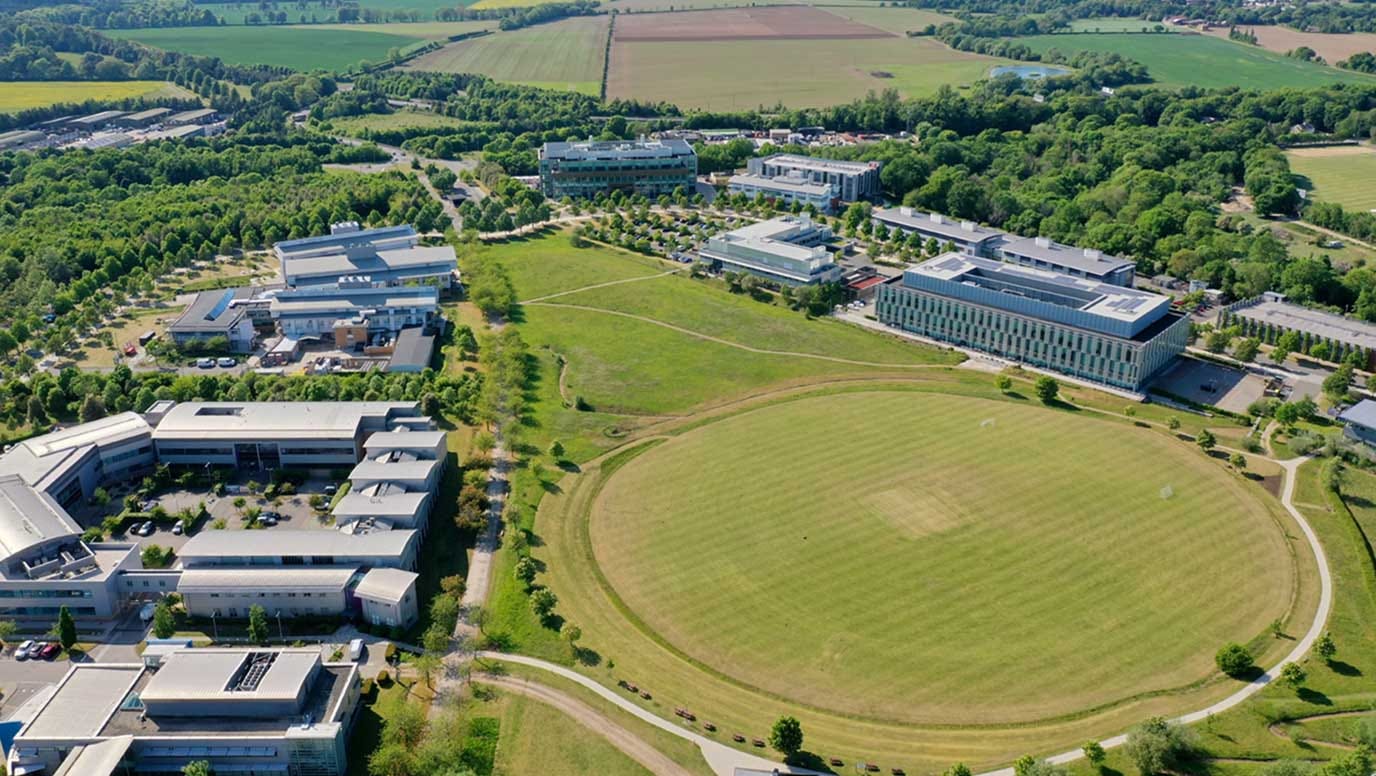
Cambridge Life Sciences Cluster
Bristol and Filton has the deepest concentration of aerospace engineering in the country outside Lancashire: Airbus and Rolls-Royce at Filton, a defence prime's cyber and AI arm in the city centre, MOD Abbey Wood with its twelve thousand procurement staff a bus ride away, strong university presence, and a robotics and semiconductor scene the other candidates lack. On the same human-capital measure where Manchester sits 91st, Bristol ranks 63rd, ahead of both Milan and Detroit, the city that gave the world the assembly line and the manufacturing cluster itself. The brilliant team at Fractile, building custom silicon to break the AI inference bottleneck, chose Bristol for their new hardware facility because Isambard-AI, the UK's most powerful supercomputer, is already there. They are exactly the founder-species firm a zone built to land a factory in Hull or Redcar never produces. Abbey Wood is the closest thing Britain has to a resident customer that is not a dockyard; the DE&S cell could be staffed by people who already live there. It is also ninety minutes from London. The weakness is that Bristol holds no zone designation, so the chassis would have to be conferred from scratch rather than repurposed from something already in place.

Filton Airfield
Milton Keynes is the corridor’s own answer to the factory problem. Around 30 mins from London, it is the largest city between Oxford and Cambridge by population and output, running at 128% of the national GVA per worker, and it has spent a decade casting itself as the place where the other two cities’ ideas get tested and deployed. The autonomy scene is the most mature in Britain: the world’s largest fleet of autonomous delivery robots, driverless shuttles on public roads, a citywide standalone 5G network, and a Smart City posture that already waves live deployment through the kind of regulatory gate the rest of the country spends pages trying to build. The land is cheap by corridor standards, the grid and road geometry were designed from scratch, and a serious government engineering presence already sits on the ground. East West Rail puts Oxford forty-five minutes away from this year. The weakness is the opposite of Cambridge’s. Milton Keynes builds superbly and invents little; it has no university of the front rank, so the founder-generation engine that fills a cluster runs weak. Perhaps someone could build an NMITE-style engineering university or Imperial could set up a hard-tech satellite campus…

Milton Keynes
Part V: What the zone looks like
If you work for a mayor or a department, this is the part to screenshot.
Three contiguous tax sites under a single combined authority. If two sites cannot see each other, redraw the boundary.
A regulatory sandbox inside the perimeter, per the Action Plan commitment: segregated trial airspace with CAA trial authorities on site, an ONR pre-licensing pathway for advanced reactor work, Environment Agency permitting run from a desk in the zone, and standing range and drilling access on adjacent land.
The defence-anchor module: facility security clearance held at zone level, with pre-cleared buildings, accredited IT and vetted site management inherited by incoming firms on signature of lease; a resident MOD/DE&S cell as standing first customer; an export-control fast lane run from the same office.
Shared plant, built once from Freeport seed capital and Investment Zone flexible spend: machine shop, EMC chamber, environmental test rigs, secure comms, with a classified-rated section for the firms that need it.
Bonded stockholding of specialty alloys and long-lead components in the customs site, under duty suspension, drawn down by zone firms on demand.
Grid connection secured at designation through the NESO connections accelerator, sized for the zone’s build-out rather than its first tenant.
A combined-authority investment vehicle drawing on the mayoral recyclable growth fund, taking warrants or preferred equity against relocation and fit-out support. Minority caps, headcount ratchets, returns ringfenced within the zone.
Relocation support as standing policy: moving grants for firms and named engineers, lease-break support, and a soft-landing service covering spouse employment and school places.
A Mayoral Development Order consenting workforce housing adjacent to the tax sites.
Strategic Sites Accelerator and National Wealth Fund applications packaged at designation.
A British Business Bank Cluster Champion and a UKEF Export Finance Manager on the delivery team.
One board, publishing its minutes, running a delivery team an order of magnitude above the English Freeport average of 6.5.
Conclusion
The window to make something like this a reality is very short.
The mayoral recyclable growth funds land in the 2026/27 settlement, which is to say they are landing now, and the first deployments will set the template for every one after. The Strategic Sites Accelerator picks its first wave within the year, and a hard-tech zone that misses it joins a queue behind every gigafactory and lab campus in the country. And the demand is not a lake but three rivers running at once: a £298 billion Defence Investment Plan committed monthly, programme by programme; a grid buildout letting contracts by the gigawatt; a compute race buying power and hardware faster than either can be made. The suppliers to all three are choosing where to expand as the contracts arrive. Every month of dispersed spending is density that never compounds, and unlike money, density cannot be reallocated later.
So, a prediction, in the same spirit as the ones I made about data centres last month, which have so far had the poor taste to keep coming true. If no single zone is chosen this funding cycle, Britain’s next generation of hard-tech founders who would have filled one will not be waiting patiently in a science park outside Warrington. They will be in El Segundo with everyone else. The talent is not loyal to the map; it is loyal to the density, and the density is currently five thousand miles away.
Lessons from Gundo to follow.
Thank you for reading. Feel free to get in touch with any questions james@amphio.com